Poor Soil Preparation
Garage slabs are commonly installed over compacted soil or engineered base material.
If the supporting material is not adequately prepared, gradual compression can create uneven concrete elevations.
Your garage floor must support parked vehicles, stored belongings, workbenches, equipment, and regular foot traffic.
When garage concrete settles unevenly, the resulting surface can make routine activities less convenient and may create additional maintenance concerns.
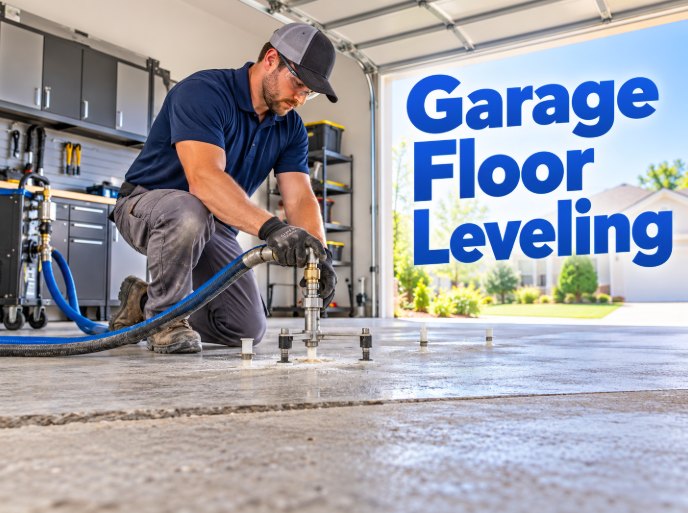
Torrance Concrete Leveling evaluates sunken garage floors and helps property owners understand available concrete repair options.
Garage floor settlement is especially important to investigate when it affects drainage, creates abrupt height changes, or occurs near load-bearing structural elements.
Concrete floors inside garages can experience settlement for several reasons.
Garage slabs are commonly installed over compacted soil or engineered base material.
If the supporting material is not adequately prepared, gradual compression can create uneven concrete elevations.
Water entering beneath a garage slab may disturb the supporting ground.
Sources can include drainage problems, plumbing leaks, and water movement from surrounding exterior surfaces.
Concrete sections located above buried utility lines may settle if the trenches were not backfilled and compacted adequately.
Certain soil conditions can lead to changing support beneath the slab as moisture levels fluctuate.
Voids or areas of weakened support beneath garage concrete may allow sections to move under repeated loading.
Property owners may notice:
Some garage floors are intentionally sloped for drainage, so a visible slope does not automatically indicate damage.
These services solve different problems.
Garage floor leveling addresses eligible settlement or elevation changes affecting the concrete slab.
Garage floor resurfacing applies material to improve the existing surface's finish or repair certain shallow defects.
A thin surface coating does not necessarily correct significant subgrade settlement.
Likewise, lifting a settled slab does not automatically create a perfectly smooth surface ready for epoxy or decorative coatings.
Our process
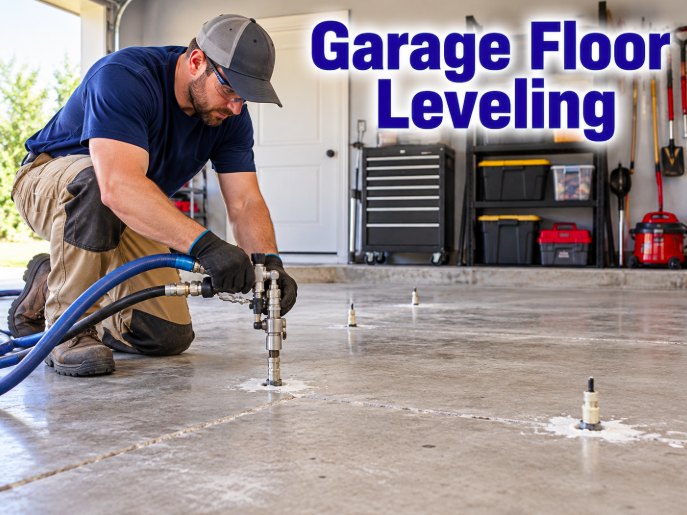
The concrete is examined for settlement patterns, cracking, surface defects, and movement around walls or entrances.
Garage floors may be located near foundations, columns, footings, and other structural elements.
It is important to distinguish ordinary slab-on-grade settlement from conditions involving structural support.
The intended garage floor slope and water exit points are considered.
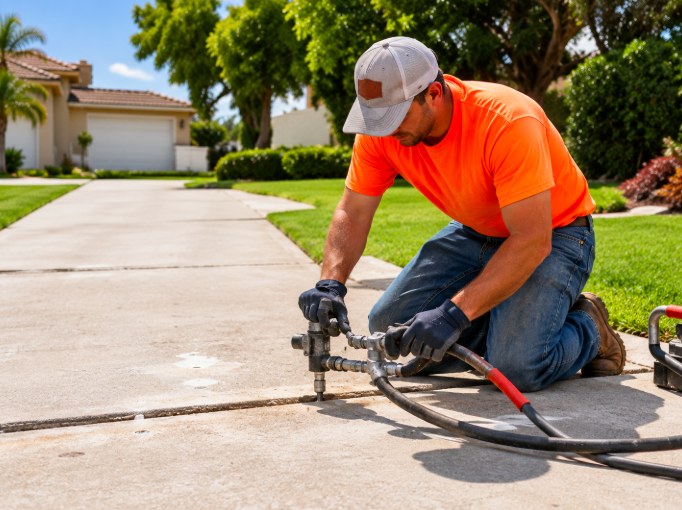
Suitable slabs may be candidates for polyurethane lifting or cementitious slabjacking.
Other situations may require concrete replacement, subgrade stabilization, or structural repairs.
After an appropriate repair, floor elevations and transitions are evaluated.
Additional surface finishing may be needed for the owner's intended use.
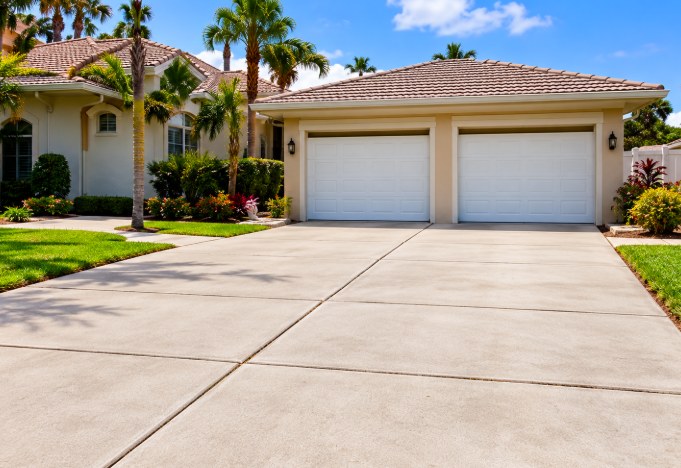
The transition between the driveway and garage floor is a common problem area.
Settlement may create an abrupt drop, interfere with vehicle movement, or contribute to water entering the garage.
Repair planning must consider the garage door threshold, weather seal, driveway elevation, and intended drainage direction.
A garage used as a workshop may require a more consistent surface for equipment placement.
Depending on the intended use, leveling can help improve the underlying floor elevation.
However, precision equipment may require a separately specified floor-flatness standard that ordinary slab lifting cannot guarantee.
Some homeowners consider decorative epoxy or other garage floor coatings.
Before installing a coating, significant settlement or unstable concrete should be evaluated.
A coating may improve the appearance of the surface, but it will not eliminate movement caused by unsupported concrete.
Cracks, moisture issues, joint movement, and surface preparation must be addressed separately as needed.
Concrete replacement may be preferable when the slab has extensive damage, widespread cracking, significant structural deficiencies, or unsuitable thickness.
A professional evaluation helps determine whether preserving the existing slab is reasonable.
Correcting suitable settlement may improve access, reduce abrupt transitions, address certain drainage problems, and preserve usable concrete.
It can also provide a better starting point for additional floor repairs or finishing work.
Pricing
Typical range: $1,200 – $5,200
Garage floor leveling is priced by the settled area and the lift required. Clearing the garage before we arrive keeps the job fast and helps keep the price down.
Prices are typical 2026 polyurethane foam leveling ranges for Torrance and the Los Angeles area, based on moderate settling (1–3 inches). You get an exact written quote after a free inspection.
Try the Price Calculator Get an Exact QuoteFAQ
Answers to common questions about garage floor leveling in Torrance. Have a question we didn't cover? Call (323) 471-4153.
Some garage slabs can be lifted or stabilized without complete replacement, depending on their condition.
Potentially, when settlement is responsible for the low area. The intended drainage slope must be considered.
Not necessarily. Slab lifting improves selected elevations but may not achieve the tolerances required for specialized floor finishes.
Sometimes, but the relationship between the slab and structural elements must be examined carefully.
Most garage floor leveling projects in Torrance cost between $1,200 and $5,200, depending on the size of the settled area, how far the concrete has dropped, and access. We provide a free inspection and a written quote before any work begins.
If your garage floor is sinking, collecting water, or developing uneven sections, identifying the cause is an important first step.
Contact Torrance Concrete Leveling at (323) 471-4153 to discuss garage floor repair options.
Call or text(323) 471-415320913 Anza Ave, Torrance, CA 90503